
Positional Trading
Key Highlights
-
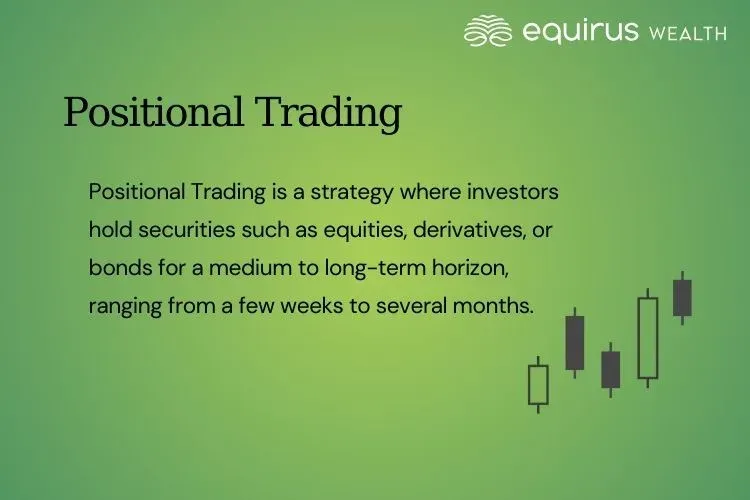
Positional Trading is a strategy where investors hold securities such as equities, derivatives, or bonds for a medium to long-term horizon, ranging from a few weeks to several months.
-
Key participants includes institutional investors, retail investors & traders, brokers & asset managers.
What is Positional Trading?
Positional Trading is a strategy where investors hold securities such as equities, derivatives, or bonds for a medium to long-term horizon, ranging from a few weeks to several months. Unlike intraday or short-term strategies, positional trading is designed to capture broader market trends and benefit from sustained price movements.
Purpose of Positional Trading
-
To take advantage of longer-term price trends in equities, indices, or fixed income instruments.
-
To align trades with fundamental or macroeconomic outlooks rather than short-term volatility.
-
To generate risk-adjusted returns by holding positions with a clear entry and exit strategy.
How Positional Trading Works?
-
Market Analysis: Investors use technical indicators (trend lines, moving averages) and fundamental insights to identify opportunities.
-
Position Building: Securities are bought or shorted with a defined stop-loss and profit target.
-
Holding Period: Positions are maintained over days, weeks, or months, depending on the strength of the trend.
-
Exit Strategy: Trades are exited when the trend shows signs of reversal or when price targets are achieved.
Key Participants
-
Institutional Investors: Leverage positional trading to align with sector or macroeconomic views.
-
Retail Investors & Traders: Use it as a balanced strategy between short-term trading and long-term investing.
-
Brokers & Asset Managers: Facilitate execution and provide research support.
Benefits of Positional Trading
-
Captures Larger Moves: Investors benefit from sustained price trends.
-
Lower Noise: Less affected by intraday volatility.
-
Balanced Approach: Combines elements of trading and investing.
-
Reduced Frequency of Trades: Keeps transaction costs relatively lower compared to day trading.
Risks & Limitations of Positional Trading
-
Exposure to Market Shocks: Sudden events or global volatility can impact held positions.
-
Capital Lock-In: Funds remain committed for longer periods, reducing liquidity flexibility.
-
Discipline Required: Strict stop-loss and risk management are essential to avoid losses.
